“[Teletherapy] is the most
convenient and affordable way to connect with a licensed therapist.”
“When in person for therapy, 75% of clients reported a stronger connection to their therapist.”
THE CHALLENGE
Convenience vs. Quality Conundrum
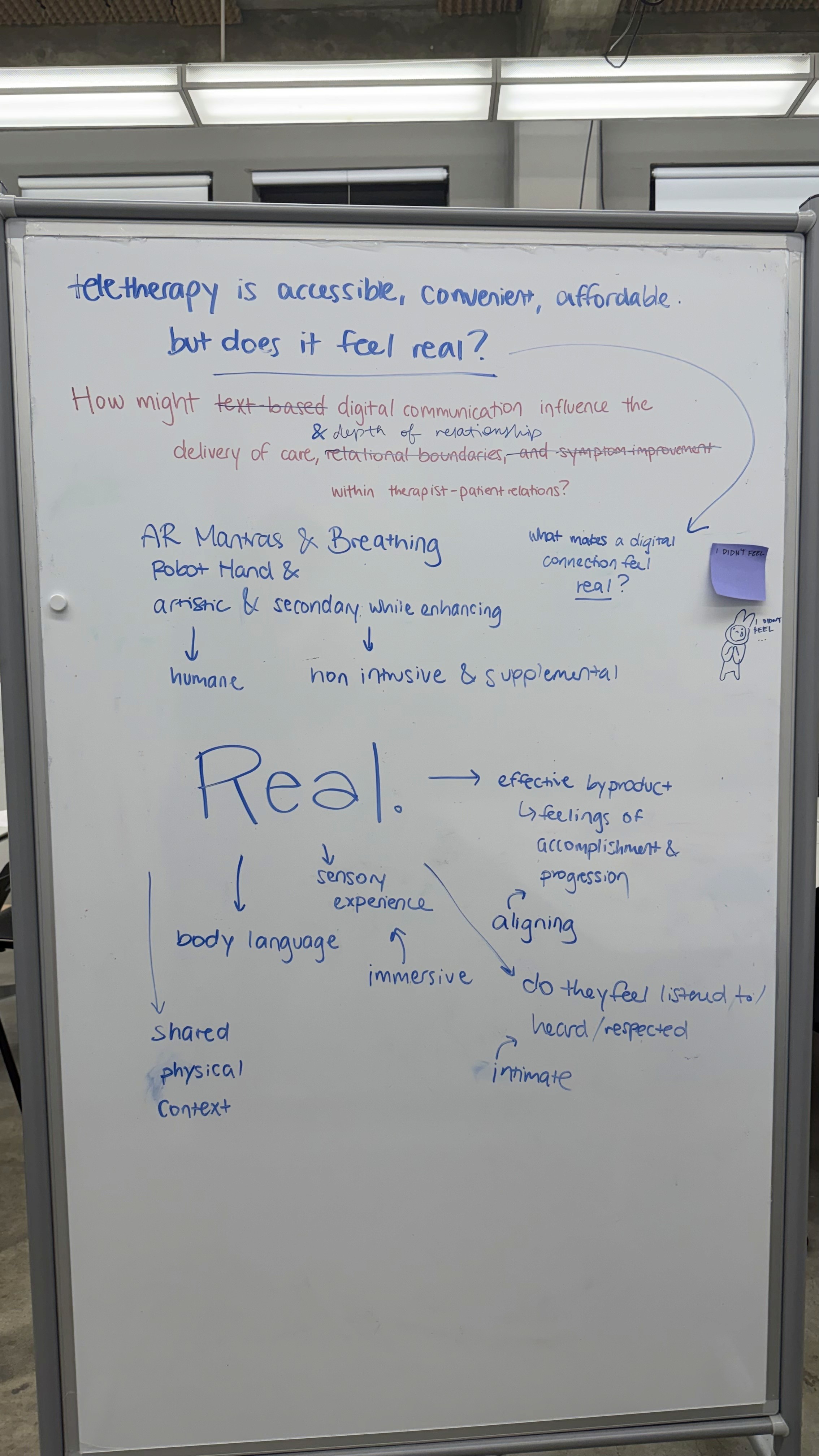
Teletherapy platforms emphasize convenience, affordability, and accessibility. But access alone doesn't guarantee a meaningful therapeutic experience.
We wanted to understand how the transition from physical to digital environments might change the quality of care, particularly the trust and connection between patients and therapists.
How does digital communication influence the delivery of care and depth of relationship within therapist-patient relations?
CENTRAL RESEARCH QUESTION
FIELD RESEARCH
Bringing both patient and therapist into the conversation.
Through an initial screener survey and snowball sampling, we found 6 patients and 3 therapists who have all conducted or received teletherapy before.
We conducted 45–60 minute interviews, including segments for directed-storytelling questions and a card sort activity. Questions were centered around what ideal therapeutic care did and did not look like.
What was most interesting is what came from these interviews.
Patients


Therapists


FIELD RESEARCH
Revealing experiences through conversation.
We wanted to move beyond general opinions about teletherapy and understand the moments that shaped patients' and therapists' experiences.
I helped develop interview questions that encouraged participants to reflect on specific interactions, recall moments of connection or disconnection, and articulate what made a session feel meaningful. Through directed storytelling and follow-up questions, we explored the subtleties of trust, intimacy, and communication that can be difficult to capture through surveys alone.
STEVE, THERAPIST


DATA SYNTHESIS
Turning conversations into patterns.
Following our interviews, we transcribed and tagged recordings in Dovetail to identify recurring observations across patient and therapist experiences. We then transferred these findings into a collaborative affinity map, grouping related observations to uncover broader themes and tensions.
Rather than treating each interview as an isolated experience, we looked for patterns across participants while paying attention to where their perspectives diverged.
From our themes emerged our key This process helped us move beyond individual anecdotes toward a more holistic understanding of the factors shaping connection and quality of care in teletherapy..
KEY INSIGHTS
Through our synthesis, we identified recurring themes that revealed how the digital environment shapes the therapeutic experience.
These insights highlighted opportunities to better support the delivery of care, the therapeutic environment, and the relationship between patients and therapists.


DESIGN EXPLORATIONS
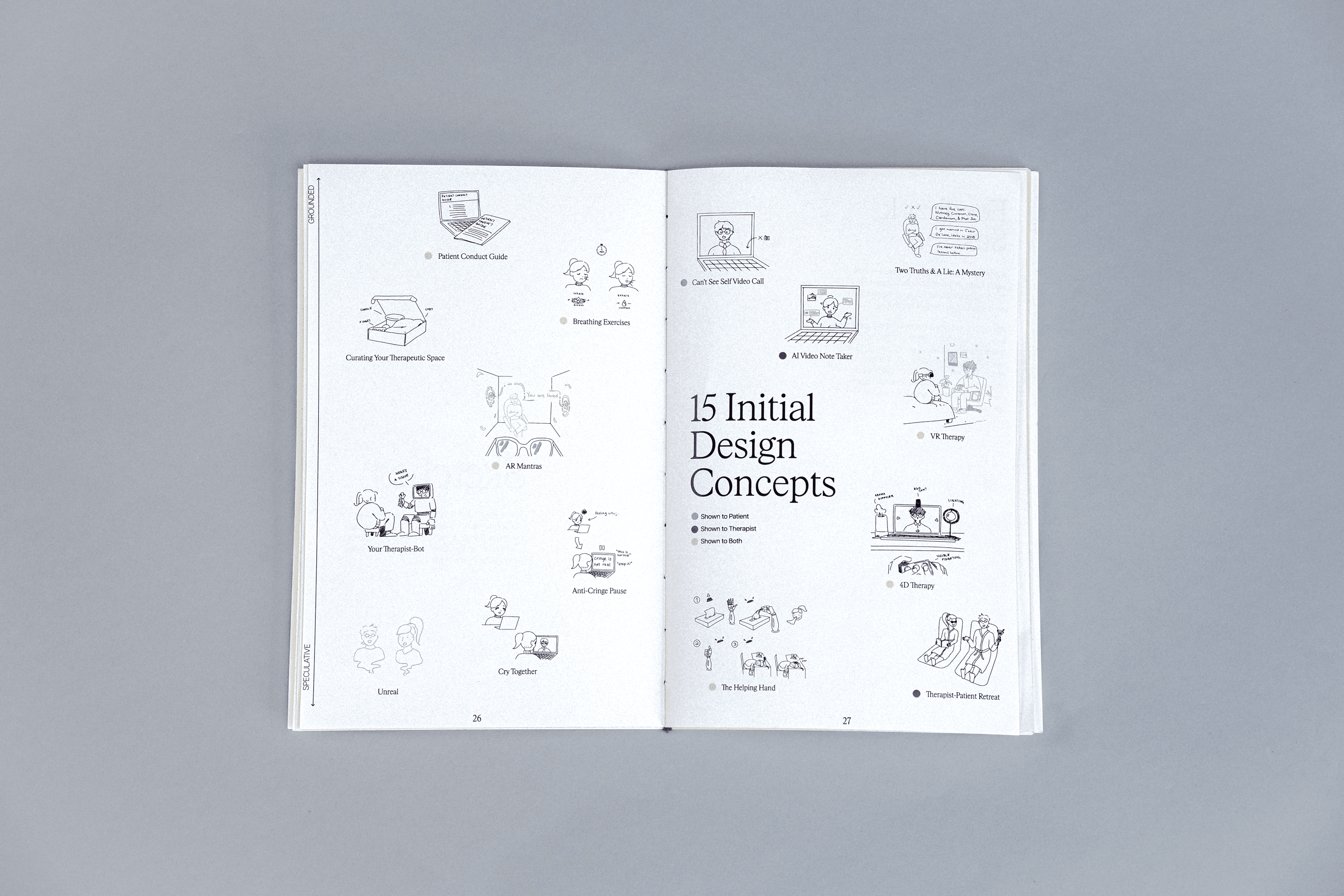
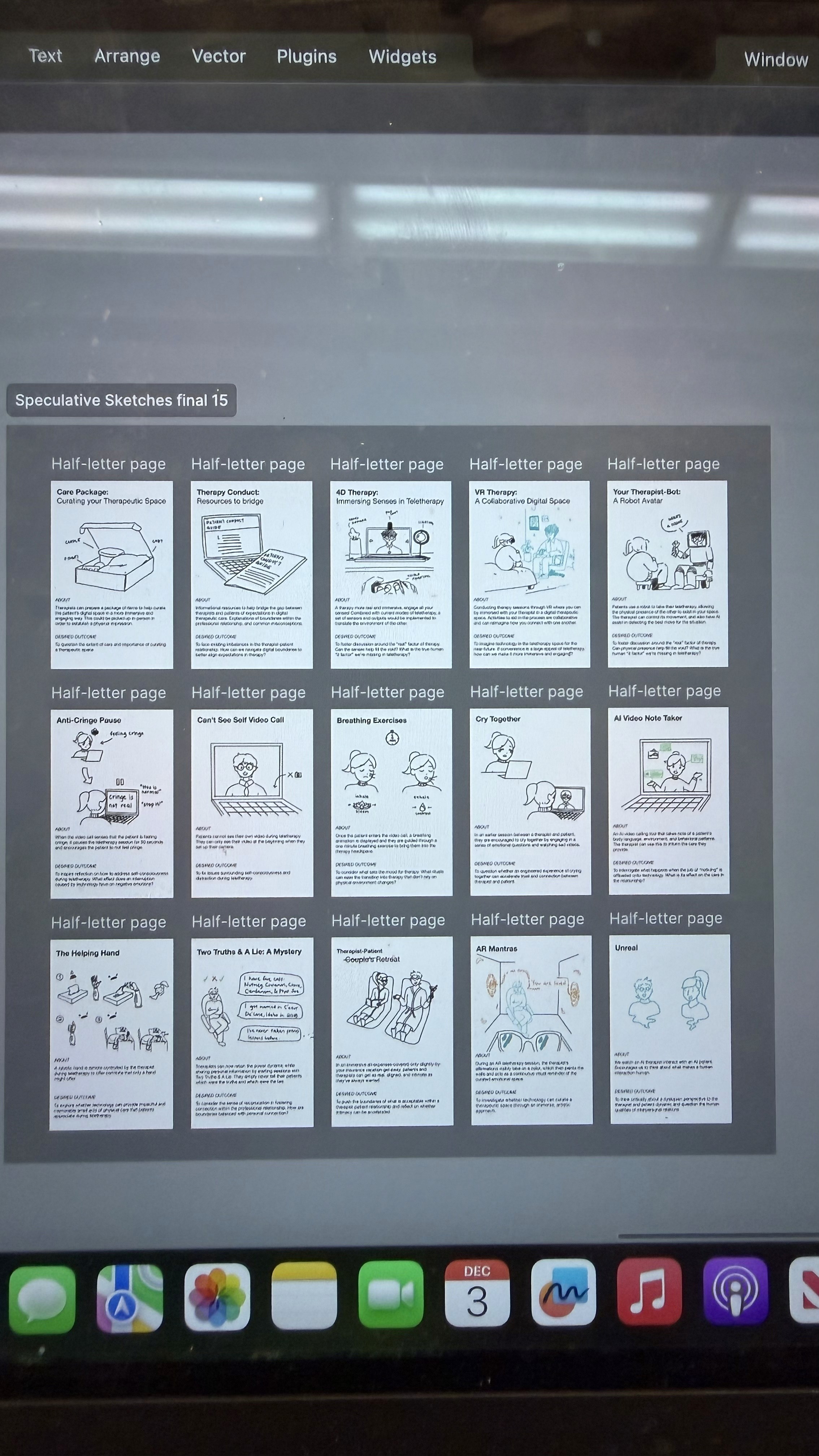
15 initial ideas & concepts in response.
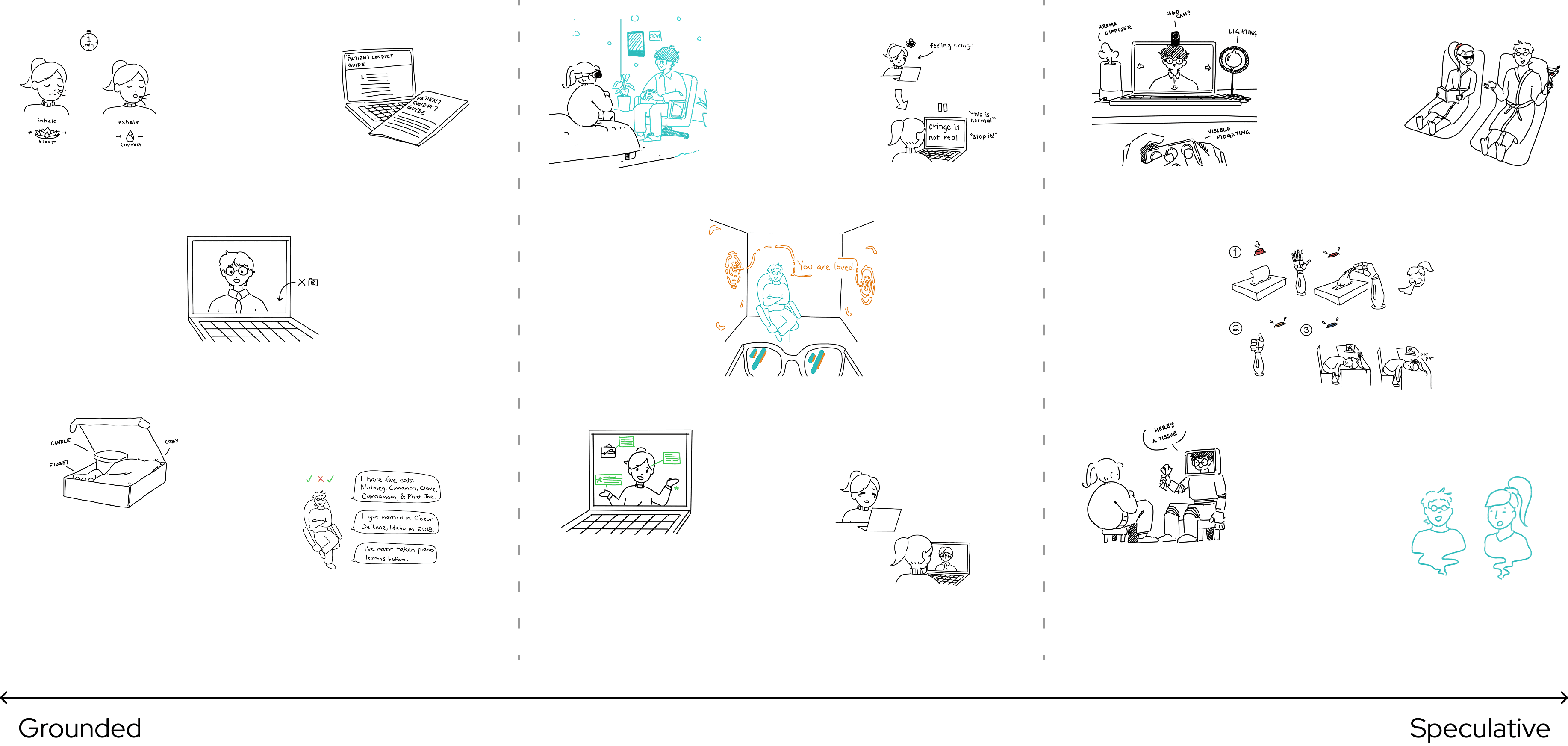
Utilizing these insights, we drafted fifteen concepts total, ranging on a spectrum of grounded to speculative ideas.
Patients
Therapist
QUALITATIVE FEEDBACK
Gaining further refinement.
We showed nine of these ideas to three of our previous interviewees, chosen specifically for their unique perspectives. Their added feedback aided in narrowing down our final findings.
IDEATION EXPLORATIONS
Design probes vs. solutions
Through these sessions, we found that the most conversation-provoking ideas fell into two categories: design solutions and design probes.
Solutions were earnest in solving the problem, and probes were intentionally designed to provoke discomfort. Together, they helped us achieve a full understanding of our problem space.

DESIGN SOLUTION FINDING
DESIGN PROBE FINDING
PRESENTATION OF FINDINGS
“Realness" is a subjective feeling.
Our research revealed that the quality of teletherapy depends on more than the technology facilitating the session. Environmental context, interpersonal expectations, and the subtleties of communication all shape how patients and therapists experience care.
Realness is a subjective feeling. In knowing this, we now have concepts and solutions for